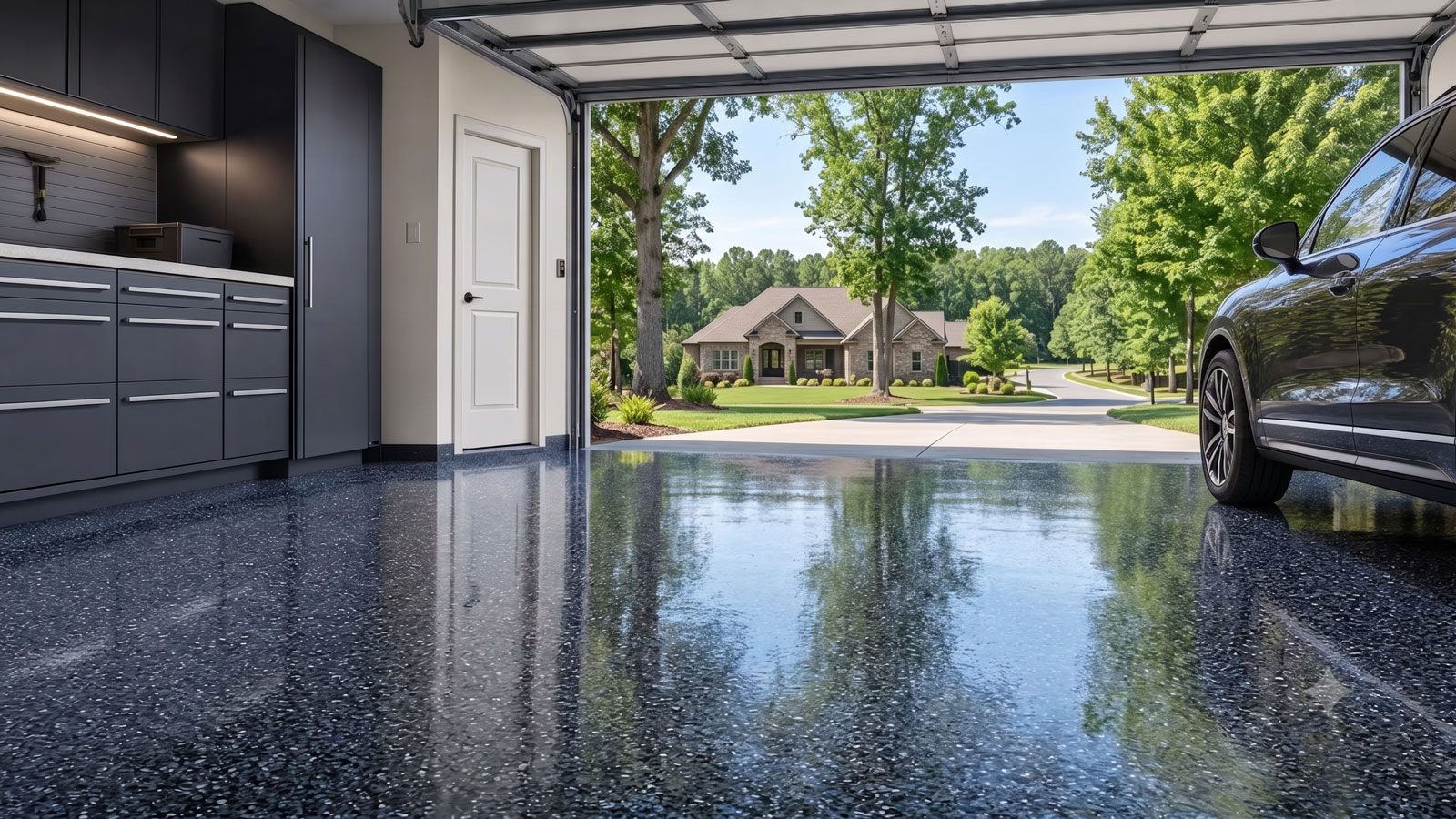
Garage Floor Coating in Falcon, CO
Garage floor coating guidance for Falcon and the eastern Colorado Springs growth-side territory.
Floor Coating Considerations in Falcon, CO
Falcon is an unincorporated eastern El Paso County community with different development and drainage issues from incorporated Colorado Springs. County records document a Falcon/Peyton Small Area Plan from 2008 and a separate Falcon drainage basin studied around the Highway 24 and Meridian Road corridors. A county corridor report identifies undersized drainage conveyances near the Meridian and Woodmen Road crossings and calls for upstream detention. These are public-system facts, not evidence that a particular Falcon garage gets wet.
Development includes established acreage and newer residential areas, with private garages that may differ in slab age and purpose. A recently poured floor might have curing compounds or sealer; an established workshop can have old paint, oil and repairs. A garage's actual condition cannot be inferred from its proximity to a highway or drainage channel.
Winter slush and road grit add maintenance considerations. A suitable epoxy, polyaspartic or decorative-flake surface can simplify cleaning on properly prepared sound concrete, but it cannot enlarge culverts, stop outside runoff or stabilize moving cracks. Before coating, inspect the floor, thresholds, prior finishes and the manufacturer's cure requirements.
Local Context
Falcon/Peyton land-use planning dates to 2008, while the Meridian Road corridor study documents undersized drainage facilities near Woodmen Road and recommended upstream detention. These distinct primary sources explain public infrastructure context but not private garage moisture.
What Affects Garage Floor Coating Cost?
Falcon coating projects range from newer attached bays to separate shops and older properties. A floor's old paint, stains, surface strength, repairs and accessibility determine preparation more than the area's development label.
County drainage plans should prompt inspection of actual door-water conditions, not an assumption that every Falcon slab is damp. Ask for preparation, repairs and curing in writing.
- New floor sealers and curing: Recent residential construction can leave surface treatments and moisture that interfere with bonding. Verify readiness and profile rather than assuming new concrete needs no work.
- Detached workshop residue: An older garage or shop can contain oil, paint and existing epoxy. Proper cleaning and mechanical removal may add meaningful labor.
- Threshold versus basin drainage: The county's Falcon basin plan describes conveyance limitations. A private driveway and gutter layout still control actual water entry; exterior drainage correction is separate.
- Cracks and old repairs: Patches, spalling, joints and active movement need inspection before coating. A decorative surface cannot repair structural instability.
- Garage access and use: Storage, steps, equipment and driveway approaches affect staging, perimeter grinding and how long the room must stay clear.
- System texture and cure: Winter residue, flake density, topcoat and temperature restrictions influence cost and when cars can return.
For the fastest response, please call or request an estimate online.
Falcon's 2008 Planning Area and Varied Garage Construction
El Paso County adopted the Falcon/Peyton Small Area Plan in 2008 and previously used it for development reviews before the newer countywide master plan took effect in 2021. County staff reports discuss maintaining rural character while accommodating differing residential densities and growth along major road corridors. These documents describe a developing unincorporated community, not the age of any particular residential floor.
An attached garage in a newer subdivision might contain curing products or a thin sealer applied during construction. A separate shop may carry worn floor paint, oil staining and patched cracks from previous use. Ask what is known about the concrete rather than assuming the entire Falcon market consists of one construction era.
Mechanical surface preparation must create a sound, bondable profile, including removal of incompatible old materials. Where cracks suggest movement or the slab remains unexpectedly damp, a contractor should assess those conditions rather than bury them beneath decorative resin.
Homeowners comparing quotes should look for the same specified tasks: old-coating removal, grinding, crack treatment, edges, full coating layers, cleanup and cure restrictions. Garage access and equipment staging can also be important on larger properties.
Falcon Drainage Basin and the Limitations of Garage Coatings
The county's Meridian Road North Corridor Plan identifies a middle tributary of the Falcon Drainage Basin and describes undersized downstream facilities near Woodmen Road. The plan discusses a recommended open channel along Meridian Road and upstream detention to limit discharge into constrained pipes. A separate 2024 county development review describes runoff toward Chico Creek and on-site detention. Those are specific documented infrastructure constraints, not proof of flooding in a nearby private garage.
During site inspection, ask whether rain crosses the threshold from the driveway, whether gutters discharge beside the slab or whether water appears only beneath vehicles. Persistent dampness without surface water is another issue requiring suitable concrete testing for the proposed product.
A coating cannot increase culvert capacity or hold back flooding. If water regularly enters from outside, solve the drainage problem separately. An appropriately installed finish on suitable concrete may make everyday grit easier to sweep or wipe, but it will not prevent winter slush or structural cracks.
Choose texture with vehicle traffic, wet shoes and maintenance in mind, and obtain a complete curing schedule that fits the actual garage temperature. Surface preparation should not be omitted to meet an advertised one-day deadline.
Frequently Asked Questions
Does Falcon's undersized drainage infrastructure mean my garage floods?
No. County reports describe public conveyance constraints. Private water entry must be established by observing the driveway, threshold and concrete.
Can a decorative floor fix drainage into my Falcon garage?
No. Grading, gutter and threshold problems require separate work; epoxy and polyaspartic finishes do not redirect stormwater.
Will a newly poured garage need grinding?
It may. Verify curing compounds, sealers, moisture and system-specific surface profile before selecting a coating.
Can an old workshop with oil receive epoxy?
Possibly after appropriate assessment and contaminant removal, but the actual slab must be sound and capable of meeting the system's requirements.
What should the Falcon quote list?
Request old-finish removal, grinding, repairs, moisture checks when indicated, topcoat layers, texture, edges and full vehicle-return instructions.
Falcon Neighborhoods & Local Context
Phone Quote Line
Discuss your project, concrete condition, and a realistic price range.
(719) 455-8444Typical Project Cost
$3,000–$5,500
Typical two-car garage range. Final pricing depends on the floor and project scope.
Other Service Areas