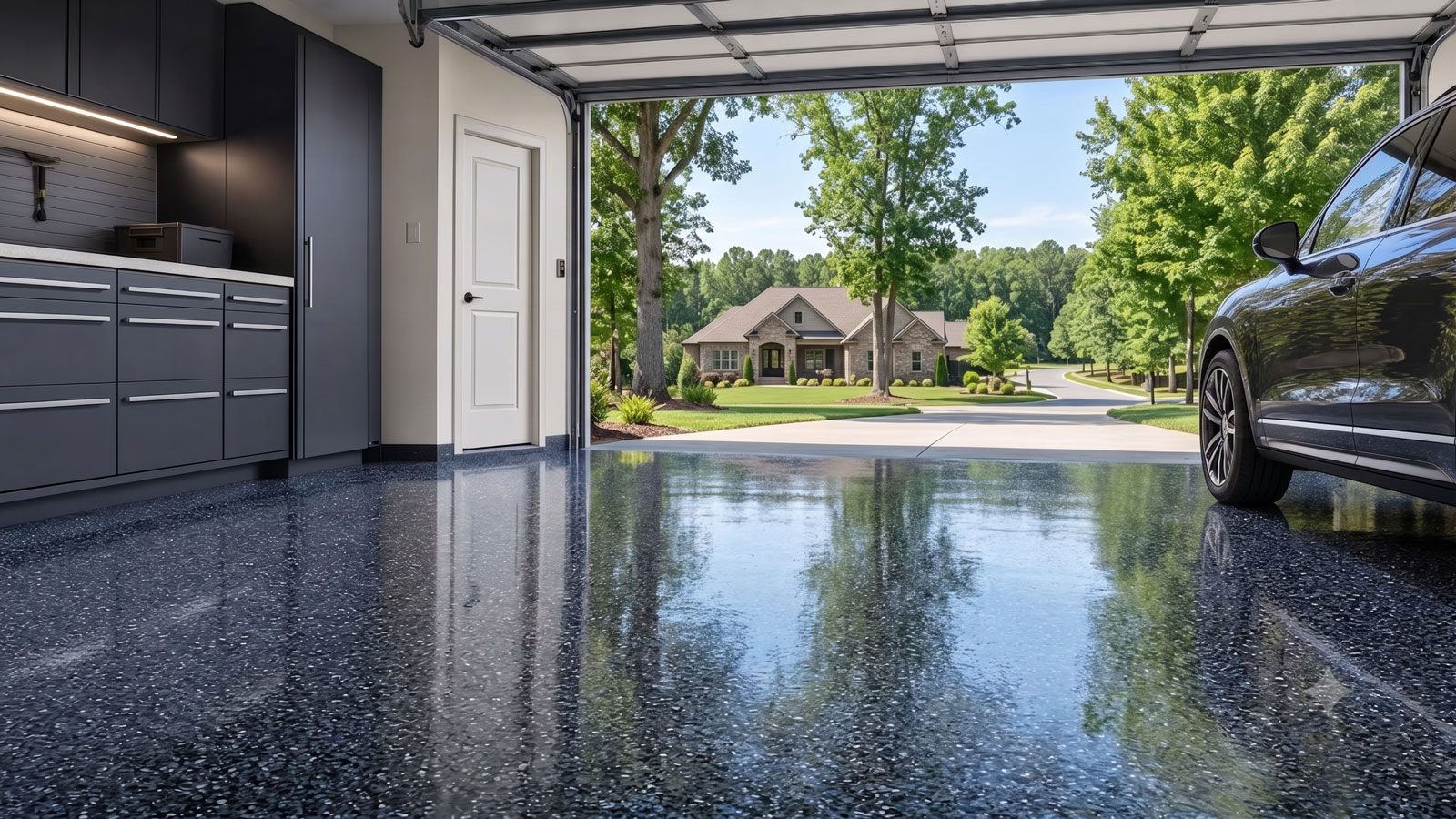
Garage Floor Coating in Black Forest, CO
Garage floor coating guidance for Black Forest's low-density residential setting.
Floor Coating Considerations in Black Forest, CO
Black Forest is a distinct, largely unincorporated part of northern El Paso County, with a preservation-planning history unlike a generic Colorado Springs subdivision. County records trace its Black Forest Preservation Plan to 1974, updated in 1987, and a trails addendum to 1999. These plans address woodland, rural-character development and roads. That mix of established acreage properties and later housing raises questions about detached garages and access, but does not determine the age or condition of a private concrete floor.
The area also experienced the June 2013 Black Forest Fire; Colorado legislative records list 489 homes lost. That is a serious local rebuilding-history anchor, not proof that a surviving or rebuilt home's garage concrete has fire damage. A coating estimator should ask about any known slab replacement or repairs rather than assuming damage from the area's disaster history.
Black Forest winters can bring slush and dirt into garages used for vehicles, yard equipment and workshops. A correctly installed epoxy, polyaspartic or flake floor may simplify cleaning of sound concrete, but it cannot prevent snowmelt, stabilize a cracked slab or correct water entering from an exterior grade. Inspect the actual floor, previous paints, moisture suitability and repairs before choosing materials.
Local Context
El Paso County's Black Forest Preservation Plan dates to 1974, with a 1987 update and 1999 trails addendum. State records list 489 homes lost in the 2013 Black Forest Fire; rebuilding history and slab condition must be evaluated individually.
What Affects Garage Floor Coating Cost?
Black Forest coating costs may reflect detached workspaces, long approaches, old paint or later repours, but none of those conditions can be assigned without property inspection. A garage on acreage and a newer bay may need different staging and repairs.
Ask the contractor to distinguish actual surface contamination, cracks and drainage from assumptions about the 2013 fire or rural land use. The estimate should explain grinding and the complete cure plan.
- Fire and rebuilding history: The 2013 fire damaged many homes, but it does not establish that a particular garage slab was exposed or replaced. Check the property's actual construction and repair history.
- Detached garage or workshop use: A separate outbuilding can have oil, paint and unusual equipment traffic. Inspect actual contamination and old coatings before specifying removal or a topcoat.
- Driveway and drainage: A long or sloping approach may change where water runs. Examine the door threshold and gutter discharge rather than presuming rural properties have moisture problems.
- Cracks, repairs and weak edges: Existing patches and surface deterioration must be assessed, and actively moving concrete may require specialized repair before decorating.
- Equipment access and clearing: Tools, stored materials, steps and distance from the staging area can change grinding and debris-removal costs. Agree on access and clearance.
- Snow tracking and curing: Texture, topcoat choice and manufacturer low-temperature restrictions influence the final system. Winter residue still requires routine cleaning after coating.
For the fastest response, please call or request an estimate online.
Black Forest Preservation Planning and Changing Garage Histories
El Paso County planning records document a Black Forest Preservation Plan approved in 1974 and updated in 1987, with a trails addendum completed in 1999. County planning reports also mention newer developments such as High Forest Ranch and Cathedral Pines near Flying Horse North. These separate planning facts show a landscape of forested acreage, preservation concerns and later residential development, rather than one uniform building type.
Some Black Forest properties may contain detached garages or workshops built long after the original home. Others may have slab replacements or previously painted concrete. The estimator should ask when the garage floor was poured, whether any old epoxy is delaminating, and whether cracks, oil or patches are present. Rural setting alone is not a floor-condition diagnosis.
Mechanical preparation must provide a suitable bonding surface. Old paints or sealers may require removal; structural movement and unexplained dampness require further investigation. A glossy decorative resin cannot compensate for weak or unsuitable concrete.
A useful estimate accounts for equipment access across the property, storage clearance, measured edges, grinding, repairs, full layer system and curing. These specifics make Black Forest's varied garage settings consequential to homeowner decisions.
Black Forest Fire History, Winter Use and Limits of a Coating
Colorado legislative materials rank the 2013 Black Forest Fire among the state's most destructive fires and list 489 homes lost. El Paso County planning documents cite the fire as a major event changing local awareness of safety and development. These are documented historical facts, but they cannot tell a contractor whether a particular existing home's slab experienced heat, rebuilding or replacement.
If a home was rebuilt or a garage repaired, ask for known construction details and examine the concrete itself. A replacement floor can still contain curing compounds or sealers; an older intact floor may have years of garage paint, workshop stains or repaired joints. Assess each condition before choosing epoxy, polyaspartic or decorative flake.
Winter snowmelt and dirt from vehicles create an ordinary maintenance challenge distinct from property water entry. A suitable continuous surface can ease cleaning, but it does not prevent snowfall, improve driveway grading or repair moving concrete.
Discuss texture for parked cars and stored equipment, then confirm temperature, moisture and cure limits. A contractor should not turn regional wildfire history into unsupported claims that the slab needs special treatment.
Frequently Asked Questions
Does the Black Forest Fire mean my garage slab needs replacement?
No. The fire's regional history does not identify conditions at your property. Inspect any actual heat exposure, repairs, replacement pours and surface soundness individually.
Are detached Black Forest garages suitable for decorative flake?
Potentially, if the concrete is sound and properly prepared. Workshop fluids, previous coatings, access and intended use should guide the system.
Can epoxy stop driveway snowmelt entering the building?
No. Exterior drainage and grade problems require their own correction; a floor finish cannot reroute water.
Will a quick-cure coating repair moving cracks?
No. Cure speed does not stabilize structural movement. The crack and substrate must be evaluated and repaired appropriately.
What should a Black Forest estimate include?
Ask for inspection, old-coating removal, grinding, crack treatment, moisture checks if warranted, edges, texture, layers and a clear vehicle-return timeline.
Black Forest Neighborhoods & Local Context
Phone Quote Line
Discuss your project, concrete condition, and a realistic price range.
(719) 455-8444Typical Project Cost
$3,000–$5,500
Typical two-car garage range. Final pricing depends on the floor and project scope.
Other Service Areas