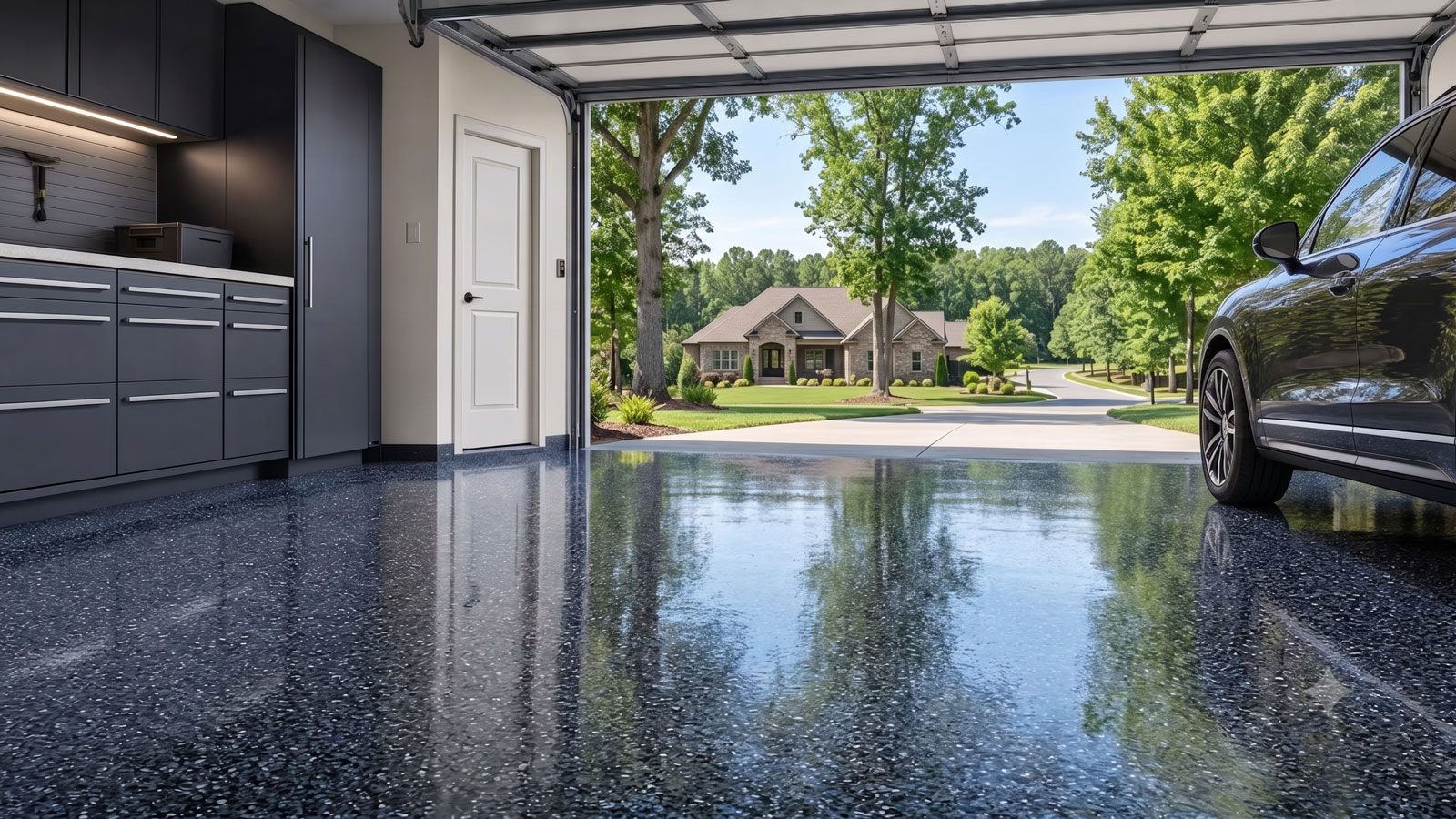
Garage Floor Coating in Colorado Springs, CO
Practical garage floor coating guidance for Colorado Springs homes, shops, and workspaces.
Floor Coating Considerations in Colorado Springs, CO
Colorado Springs has a substantial, documented stormwater history relevant to how homeowners think about drainage, but not a diagnosis of any private garage floor. The city operates a Stormwater Enterprise under MS4 permit COS000004 and a 2016 intergovernmental agreement with Pueblo County. Voters approved a dedicated stormwater fee in November 2017 to support drainage infrastructure through 2038. Those specific public facts explain why rain and snowmelt management matters locally; they do not show whether an individual garage has water entry.
The city's housing ranges from established blocks to expanding suburban neighborhoods near the foothills and plains. A garage may be original, added later or repoured independently of a home's age. A floor can retain paint, oil, weak patches or construction sealer even when it looks clean. Winter grit carried on vehicles adds ordinary maintenance demands, distinct from runoff crossing a threshold.
A properly installed epoxy, polyaspartic or decorative-flake system may make sound concrete easier to maintain, but it cannot redirect stormwater or stabilize moving slabs. Ask for a site-specific estimate that inspects existing treatments, cracks, moisture suitability, concrete profile and the garage's actual use before discussing topcoat speed or color.
Local Context
Colorado Springs Stormwater Enterprise operates under MS4 permit COS000004, a 2016 Pueblo County agreement and a voter-approved November 2017 fee. Its responsibilities are drainage infrastructure, not private coating or a guarantee of dry garage slabs.
What Affects Garage Floor Coating Cost?
Preparation cost in Colorado Springs depends on an individual slab's age, prior coatings, pitting, repair needs and accessibility. A newer-looking floor may still have builder-applied sealer, and an old garage can have a replacement pour.
Regional stormwater obligations do not establish a homeowner's moisture conditions. A quality bid separates active runoff fixes from grinding, crack repair, system layers, texture and full curing time.
- Old film and garage history: Paint, oil and previous resin can prevent a dependable bond. The contractor should inspect and include the removal of incompatible layers rather than simply covering them.
- New construction compounds: Curing treatments and sealer on newer concrete may demand surface profiling and moisture evaluation before epoxy or polyaspartic can be applied.
- Snowmelt and road grit: Vehicles can carry winter residue inside. Existing deposits need appropriate cleaning and preparation, and the finished floor will still require maintenance.
- Threshold water and slope: The city's drainage enterprise manages public channels, while driveways and downspouts determine property-level water entry. Active runoff calls for a separate solution.
- Cracks and moving joints: Inspect pitting, patches and structural movement. Some damage can be repaired during preparation, but resin cannot stabilize an active structural problem.
- Texture and weather window: Topcoat UV behavior near a door, flake density, texture and product temperature limits affect installed cost and return-to-parking timing.
For the fastest response, please call or request an estimate online.
Colorado Springs Growth and the Concrete Beneath the Finish
Colorado Springs grew substantially during the second half of the twentieth century. Its own stormwater-fee explanation links growth and impervious surface expansion to increasing runoff volumes and rates. Residential construction and later redevelopment therefore span different periods, but neither the city's growth story nor a neighborhood's age tells an installer the condition of a specific garage floor.
An established garage may have been painted several times, repoured or repaired after home construction. A newer attached bay can have invisible curing products or sealer that require removal. Ask about oil, stains, prior coverings and whether cracks appear stable. Those factors determine grinding and repair much more reliably than a generalized suburb or foothills label.
Preparation should create a sound mechanical profile that matches the proposed product's technical limits. Cracks, weak concrete and suspected slab moisture must be evaluated, not hidden. A premium topcoat does not repair structural movement or overcome a contaminant layer underneath.
Compare proposals using the work actually included: storage clearance, surface grinding, old-finish removal, cracks, edges, layers, texture and curing. The contractor should describe how unexpected weak concrete discovered during preparation would affect the job.
The Stormwater Enterprise and a Garage Door's Real Exposure
Colorado Springs' Stormwater Enterprise manages public channels, detention, storm drains and MS4 permit responsibilities. The city says its 2016 Pueblo County agreement and federal/state permit requirements underpin its drainage criteria, and a dedicated fee approved in November 2017 supports ongoing infrastructure. These are hard public-water-management anchors, not measurements of moisture within any one garage.
During a storm, a homeowner can observe whether water arrives from a sloped driveway, gutter discharge or side door. Snow brought indoors on cars is a different, often ordinary source of wetness. Persistent dark patches in concrete during dry periods might require appropriate substrate evaluation before coating.
A floor coating cannot substitute for public stormwater works, reverse a poor driveway slope or waterproof structural movement. Where active outside water entry exists, obtain a separate drainage solution. Where the slab is sound and appropriately dry for the selected system, a continuous finish can help with routine cleanup.
Discuss texture for wet footwear, grit and household parking, and ask for the manufacturer's acceptable surface temperature and cure conditions. A full installation plan matters more than an advertised one-day topcoat, particularly in changing Front Range weather.
Frequently Asked Questions
Does Colorado Springs' stormwater permit mean garage concrete is wet?
No. The city's MS4 permit concerns public stormwater quality and infrastructure. Private concrete moisture requires its own assessment based on observed conditions.
Can coating stop runoff entering an uphill garage?
No. Exterior grade and drainage issues must be addressed separately. Epoxy or polyaspartic flooring cannot redirect rainwater.
Does a new Colorado Springs slab need mechanical preparation?
Potentially. Curing compounds, sealers and moisture limits need checking, and coating manufacturers commonly require a suitable surface profile.
Will the finished floor eliminate snowmelt cleanup?
No. Vehicles still carry grit, snow and water inside. A compatible finished coating may be easier to clean, but maintenance remains necessary.
What should a Colorado Springs bid detail?
Request old-coating removal, grinding, repairs, moisture checks where warranted, full layer system, finish texture, edges and vehicle-return restrictions.
Colorado Springs Neighborhoods & Local Context
Phone Quote Line
Discuss your project, concrete condition, and a realistic price range.
(719) 455-8444Typical Project Cost
$3,000–$5,500
Typical two-car garage range. Final pricing depends on the floor and project scope.
Other Service Areas